

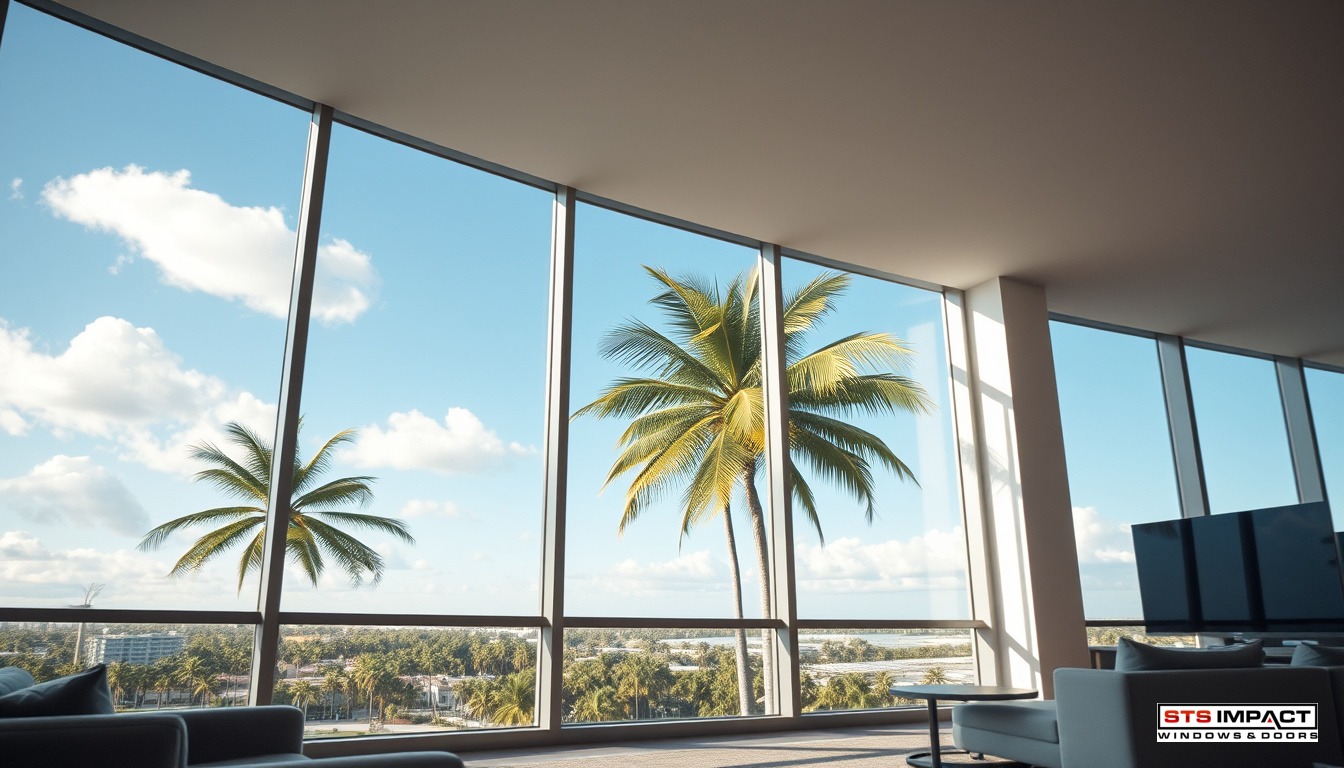
Why Boca Raton Condo Owners Face a Different Kind of Window Replacement Challenge
Replacing windows in a single-family home is straightforward compared to what condo residents in this part of South Florida deal with. If you live in one of the mid-rise or high-rise buildings near Boca Raton Airport along Airport Road, or in a managed community off Glades Road near FAU’s College of Business, your window replacement project involves layers of approval, coordination, and code compliance that most general contractors simply aren’t set up to handle.
Florida’s Building Code treats high-rise and multi-unit residential structures differently from detached homes. Wind load requirements increase significantly at higher floor levels, and the pressure ratings required for impact windows and doors Florida installations must match the specific exposure category of the building. A window product that passes code for a second-floor unit in a garden-style complex may not meet the requirements for a tenth-floor unit facing the Atlantic corridor.
Then there’s the association layer. Most condo communities in this area operate under a master insurance policy that covers the building envelope. When you replace a window, you’re technically modifying that envelope, which means your HOA or condo board will almost certainly require pre-approval, specific product specs, and sometimes a licensed architect’s sign-off before a single frame gets removed. Skipping this step doesn’t just delay your project — it can result in fines, forced removal, and a lien on your unit.
Association Approval: What to Prepare Before You Buy
Most condo boards want to see a few specific things before they’ll sign off on a window replacement. First, product approval documentation showing the window or door meets Florida Product Approval (NOA) standards for your building’s wind zone. Second, proof that the contractor holds a current Florida contractor’s license and carries adequate liability coverage. Third, a description of how the installation will be done — including how debris will be managed in common areas and whether any scaffolding or lift equipment is needed.
Getting this paperwork together before you commit to a purchase saves weeks of back-and-forth. Check the product approval documentation from the manufacturers your installer works with. Brands like PGT, CGI, ES Windows, and WinDoor all publish Florida Product Approval numbers that your condo board’s engineer can verify instantly.
High-Rise Wind Exposure and What It Means for Product Selection
Buildings above 30 feet in Boca Raton fall into a higher wind exposure category under ASCE 7, the standard Florida engineers use for structural load calculations. At these heights, casement impact windows Florida and fixed picture units often outperform single-hung designs because their multi-point locking systems distribute wind pressure more evenly across the frame. For corner units, which face two wind directions simultaneously, the engineer of record may specify even higher design pressure ratings than what’s standard for interior-facing units on the same floor.
This is why product selection for a condo replacement isn’t just about aesthetics or price. The window type, glazing thickness, frame material, and anchor spacing all feed into a specific DP (design pressure) rating that has to match the building’s wind study. A fixed impact window Florida in a non-openable configuration is sometimes the only option for certain facade positions, particularly on floors where emergency egress requirements are met through other means.
The Noise Factor: Living Near Airport Road and Glades Road


Storm protection gets most of the attention, but for residents living within a mile of Boca Raton Airport or along the stretch of Glades Road that runs past Florida Atlantic University, everyday noise reduction is often the more immediate quality-of-life concern. Aircraft on approach, student traffic, and the steady hum of Northwest 35th Street during peak hours are a daily reality for thousands of area homeowners and condo residents.
Impact-rated glass does more than stop wind-driven rain. The laminated interlayer — a polyvinyl butyral (PVB) layer bonded between two panes of glass — dampens sound transmission in a way that standard insulated glass simply can’t match. Laboratory testing shows that laminated impact glass typically achieves an STC (Sound Transmission Class) rating between 35 and 45, compared to around 26-28 for a basic double-pane unit. In practical terms, that’s the difference between hearing every jet on approach and hearing a muffled background hum you can mostly tune out.
Which Window Configurations Perform Best for Sound Attenuation
Not all impact windows Florida deliver the same acoustic performance. Casement windows with compression seals generally outperform single-hung units for sound blocking because the frame compresses against the seal when locked, eliminating the slight gaps that a sliding or hung sash leaves behind. Horizontal roller impact windows Florida trade some acoustic performance for ease of operation, which is a reasonable choice for rooms where ventilation matters more than quiet.
For bedrooms or home offices facing a busy road, fixed impact units with thicker laminated glass (7/16″ or greater overall glass thickness) are worth the premium. Pair them with a solid impact doors Florida entry system — one with a continuous weatherstrip and a multi-point lock — and the difference in interior noise levels is noticeable from the first night.
Area homeowners who want to dig into the technical side of acoustic performance can reference the Florida Department of Financial Services guidelines for building code compliance, which also covers how impact-rated products intersect with insurance requirements in Palm Beach County.
Replacing Windows in a Boca Raton Condo: The Step-by-Step Reality
A lot of homeowners go into a window replacement thinking it’s a two-week project. In a condo, four to eight weeks from first call to final inspection is more realistic, and that’s assuming no permit delays. Here’s what that timeline actually looks like on the ground.
The process starts with a site measure — not a rough estimate, but a precise field measurement by someone who knows how to read a building’s existing opening dimensions and account for the structural rough opening versus the visible frame. Then comes product selection, which in a condo must be cross-referenced against the association’s approved product list if one exists. After that, the contractor pulls a permit with the City of Boca Raton’s Building Division, which requires submitting signed and sealed drawings for any structural modifications. Inspections happen at rough opening and at final installation. Only after final inspection sign-off is the permit closed.
Financing this kind of project is a real consideration for many condo owners. PACE financing through programs like Ygrene is available in Palm Beach County and attaches repayment to the property tax bill rather than requiring a credit-based personal loan. For condo units, eligibility depends on the association’s governing documents, so it’s worth checking with your board before applying.
You can also browse the full range of available window and door products to understand what options are on the table before your first consultation.
Common Delays and How to Avoid Them
The most common reason a condo window replacement stalls mid-project is a discrepancy between the ordered product’s Florida Product Approval number and what the building’s wind study requires. This happens when a salesperson specs a product based on general availability rather than the specific DP rating the engineer of record put on file when the building was permitted. Avoid this by asking your contractor to pull the building’s existing wind study from the county records office before ordering any product.
The second most common delay is a scheduling conflict with the building’s freight elevator or loading dock. Most managed buildings in this area limit contractor access to weekday business hours and require advance scheduling for elevator use. A contractor who doesn’t ask about this upfront will find out the hard way when their crew shows up with window units and nowhere to stage them.
For more answers to common questions about the replacement process, the impact windows FAQ page covers a wide range of installation and product topics in plain language.
Frequently Asked Questions
Do I need my condo association’s approval before installing impact windows in Boca Raton?
Yes, in nearly every managed condo community in this area. The association’s governing documents (CC&Rs or Declaration of Condominium) typically classify windows as part of the building envelope, which means any replacement requires board pre-approval. You’ll generally need to submit the product’s Florida Product Approval number, your contractor’s license and insurance certificate, and a description of the installation scope. Getting this approval before signing a contract with your installer prevents costly project holds.
What design pressure rating do I need for a high-rise unit near Boca Raton Airport?
Design pressure requirements depend on your building’s height, its distance from the coastline, and the exposure category assigned by the engineer of record when the building was originally permitted. Units above 30 feet in open coastal exposure zones frequently require DP ratings of +60/-60 or higher. The safest way to confirm the correct spec is to pull the building’s existing permitted wind study from Palm Beach County’s records and give that document to your window contractor before they quote a product.
Can PACE financing be used for condo window replacements in Palm Beach County?
PACE financing (such as Ygrene) is available in Palm Beach County, but eligibility for condo units depends on whether the association’s governing documents allow property-assessed liens. Some associations have voted to opt out of PACE programs, while others permit them for individual unit improvements. Check your association’s current position on PACE before applying. If PACE isn’t available, contractor-arranged financing through programs like Momnt is another option that doesn’t require a property lien.
If you’re a condo owner or homeowner in this part of South Florida and you’re ready to move forward with a window replacement that actually gets done right, STS Impact Windows & Doors has the product knowledge, licensed installation crews, and permitting experience to handle the full process. From the initial site measure through final inspection, the team at STS Impact Windows & Doors takes the coordination off your plate so you’re not chasing paperwork between your board, your contractor, and the building department. Reach out today to schedule a no-pressure consultation and get a quote built around your building’s specific requirements.


