

What’s the Difference Between Impact Windows and Laminated Windows?
All impact windows use laminated glass, but not all laminated windows qualify as impact-rated. True impact windows must pass specific missile-strike and pressure tests set by Florida’s building code before they can be installed as storm protection. A basic laminated window from a hardware store won’t meet those standards, even if the glass itself looks similar.
Why the Testing Standards Actually Matter


Florida’s Florida Building Code requires any window sold as impact-rated to survive two tests: a large missile test (a 9-pound 2×4 fired at the glass at 50 feet per second) and a series of positive and negative pressure cycles. The glass has to hold together without the frame pulling away from the wall. That’s the real bar, and most laminated products you’d find at a big-box store simply aren’t engineered or tested to clear it.
The Role of the Interlayer
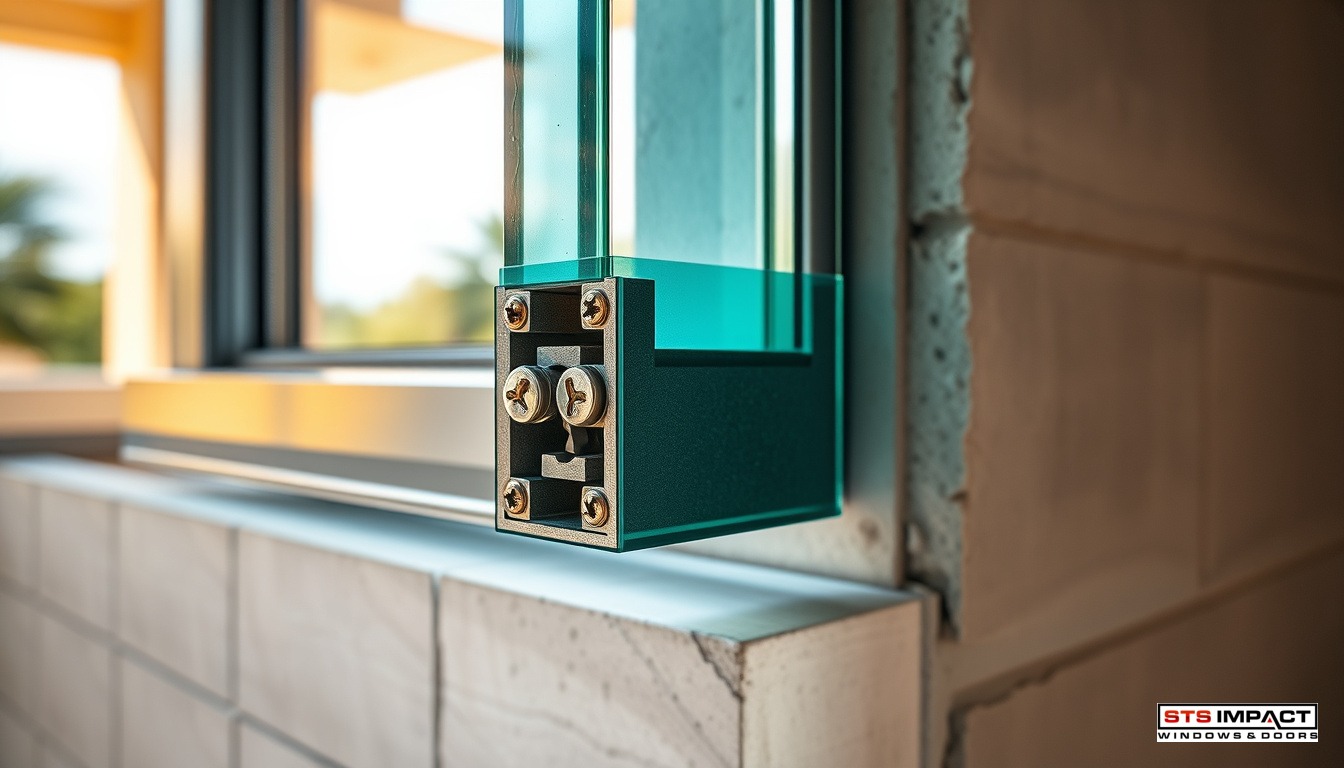
Inside every impact-rated pane, two sheets of glass are bonded to a polyvinyl butyral (PVB) or ionoplast interlayer. The interlayer is what keeps the glass from scattering when it breaks. Thicker interlayers, like the ones used in high-velocity hurricane zone products, absorb more energy during an impact. Basic laminated glass uses a thinner version of the same technology, which is why it doesn’t always pass storm testing. The spec sheet on the product will tell you the interlayer thickness, and a licensed installer can help you read it.
Frame Construction Changes Everything
Glass strength alone doesn’t determine whether a window survives a storm. The aluminum or vinyl frame has to be engineered to match the glass. An impact-rated frame is anchored into the rough opening with specific fastener patterns that are spelled out in the product’s Notice of Acceptance (NOA). Pull out a frame anchor and the whole system can fail during a storm even if the glass itself stays intact. This is why a licensed window contractor in Boca Raton pulls permits and follows installation drawings, rather than just swapping glass into an existing frame.
If you’re researching which products have the right specs for your home, the product options at STS Impact Windows & Doors include brands like PGT, CGI, and ES Windows, all of which carry Florida product approvals. That approval number is what connects the window to its test results, and it’s what inspectors look for when the job is finaled.
How Delray Beach and South Palm Beach County Homes Are Affected
Homes in Delray Beach and the rest of coastal Palm Beach County sit in the High-Velocity Hurricane Zone (HVHZ) or just outside it, depending on the municipality. That designation tightens the required design pressure ratings. A window that’s approved for Miami-Dade HVHZ is generally the gold standard and will be accepted anywhere in the state. If a salesperson is quoting you a product that only carries a Broward or Palm Beach county approval but not Miami-Dade, ask why before you sign anything.
Local residents often assume any impact glass will do the job equally well. In practice, the design pressure rating printed on the Notice of Acceptance has to match the loads calculated for your specific home based on its height, roof shape, and distance from the coast. Your contractor should be doing that calculation before ordering product, not after. For a deeper look at what this process involves, the Florida Building Commission publishes the code requirements and approved product listings online.
For storm resilience standards and what’s expected at the federal level, the FEMA Building Science resources on hurricanes explain how wind loads are calculated and why glazing standards vary by wind zone.
Ready to find out what your home actually needs? Get a free quote from STS and have a licensed installer review your openings before you commit to any product.
Related Questions
Can a window be impact-rated without being hurricane-rated?
These terms are often used as if they’re interchangeable, but they carry different weight. “Impact-rated” has a specific legal meaning tied to Florida’s product approval process and mandatory testing. “Hurricane-resistant” is a marketing phrase with no regulated definition, so a window can carry that label without passing any standardized test. Always ask for the product’s Florida approval number and look it up before purchasing.
Does the type of impact glass affect how much UV light gets into the house?
Yes, and the difference is more noticeable than most people expect. Standard clear impact glass blocks roughly 99% of UV-A and UV-B radiation thanks to the laminated interlayer, which is a significant improvement over single-pane glass. Tinted or low-e coated impact glass goes further by reducing solar heat gain, which lowers cooling costs during South Florida’s long summers. The tradeoff is slightly reduced visible light transmission, so it’s worth looking at samples before choosing a glass package.


