

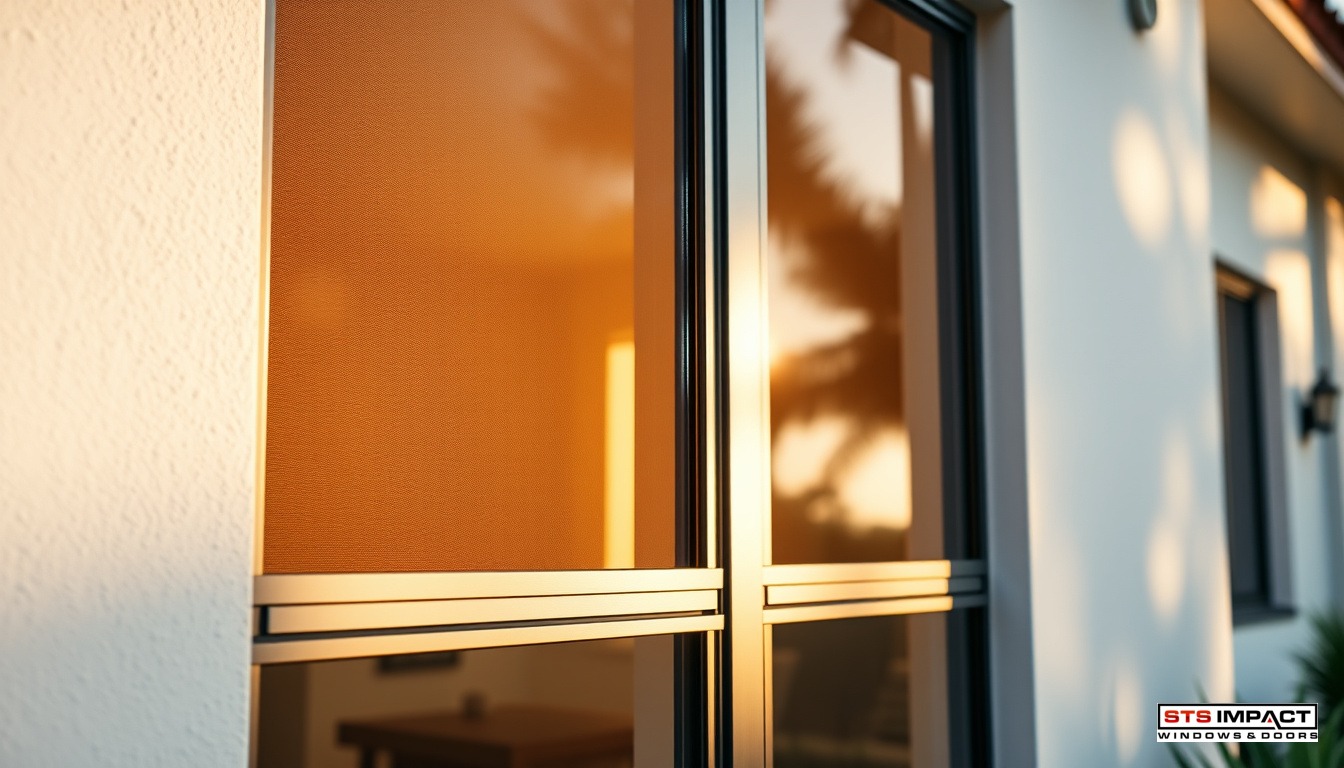
Why Does Impact Window Glass Come in Different Opacity and Tint Options?
Impact window glass comes in different tints and opacity levels because the glass itself is engineered to serve multiple purposes beyond just storm protection. Solar heat gain, privacy, glare reduction, and energy efficiency all vary depending on the glass coating and tint you choose. The right option depends on your home’s orientation, your HOA’s rules, and how much direct sun your windows get throughout the day.
What Actually Changes Between Tint Options


The Science Behind the Coating
Low-E coatings are applied to the inner surface of the glass to reflect infrared heat back outside before it enters your home. Clear glass with a Low-E coating looks nearly transparent but can block up to 70% of solar heat. Bronze, gray, and blue-green tints take that a step further by absorbing more light before it gets through the pane. For South Florida homes that face west or south, a reflective or lightly tinted glass can make a measurable difference on your cooling bill during a seven-month summer.
The interlayer — the plastic film bonded between the two panes in impact glass — also plays a role. Some manufacturers offer interlayers with added UV-blocking properties. Brands like PGT, CGI, and ES Windows each offer their own glass packages, and the performance numbers between them are real, not marketing fluff.
Privacy Glass vs. Standard Clear
Some homeowners, especially those with ground-floor bedrooms or homes close to neighboring properties in communities like East Boca Raton, choose obscure or frosted glass for bathrooms and side windows. This is still fully impact-rated glass. The texture is created during manufacturing, so it doesn’t affect the structural integrity of the laminated pane. You get privacy without adding window treatments that trap heat against the glass.
How Local Conditions Should Guide Your Choice
South Florida’s Sun Angle and Heat Load
Boca Raton sits at about 26 degrees north latitude, which means the sun stays relatively high in the sky year-round. West-facing windows get hammered by afternoon sun from May through October. A high-performance tinted glass — even a light bronze — on those exposures can cut solar heat gain by 30 to 40% compared to clear glass with no coating. That’s not a small number when your AC is fighting 90-degree heat and 80% humidity at the same time.
East-facing windows tend to handle morning light, which is softer and less intense. Many homeowners in the area use clear Low-E glass on the east side and a slightly darker tint on the west. A good installer will walk through this with you during the measurement phase. If yours doesn’t bring it up, ask. It’s worth the conversation before the order is placed.
You can review the full range of glass packages available through STS to get a clearer picture of what each option looks like in practice.
HOA and Aesthetic Requirements
Many planned communities and condo associations in Palm Beach County have approved glass appearance standards. This usually means a restriction on how reflective the exterior of the glass can look, or a requirement that all units in a building match. Before you fall in love with a particular tint, pull your HOA docs or submit a sample request to the board. Some associations specifically prohibit highly reflective silver coatings because they create glare for neighbors. Getting this cleared up before your order is placed saves you from having to swap glass after installation — which is an expensive fix.
The City of Boca Raton’s official website has resources for permit and building code requirements that may also touch on glass specifications for your area.
For energy performance benchmarks and testing standards, the National Fenestration Rating Council publishes ratings for most major impact window products — useful when comparing two glass packages side by side.
Related Questions
Does window tint affect hurricane impact ratings?
No. The tint or coating on impact glass is applied to the surface or interlayer and does not change the structural performance of the laminated assembly. A bronze-tinted impact window carries the same Miami-Dade or Florida Product Approval as a clear version of the same unit, as long as both were tested and certified by the manufacturer.
Can you add tint to existing impact windows after they're installed?
You can apply aftermarket window film to existing impact glass, but it’s not the same as factory-applied Low-E coatings. Films can bubble, peel in high heat, and may void the window manufacturer’s warranty if not explicitly approved. If heat gain is a problem after installation, talk to your contractor about whether a glass upgrade makes more sense than a film application. The STS FAQ page covers common post-installation questions in detail.


