

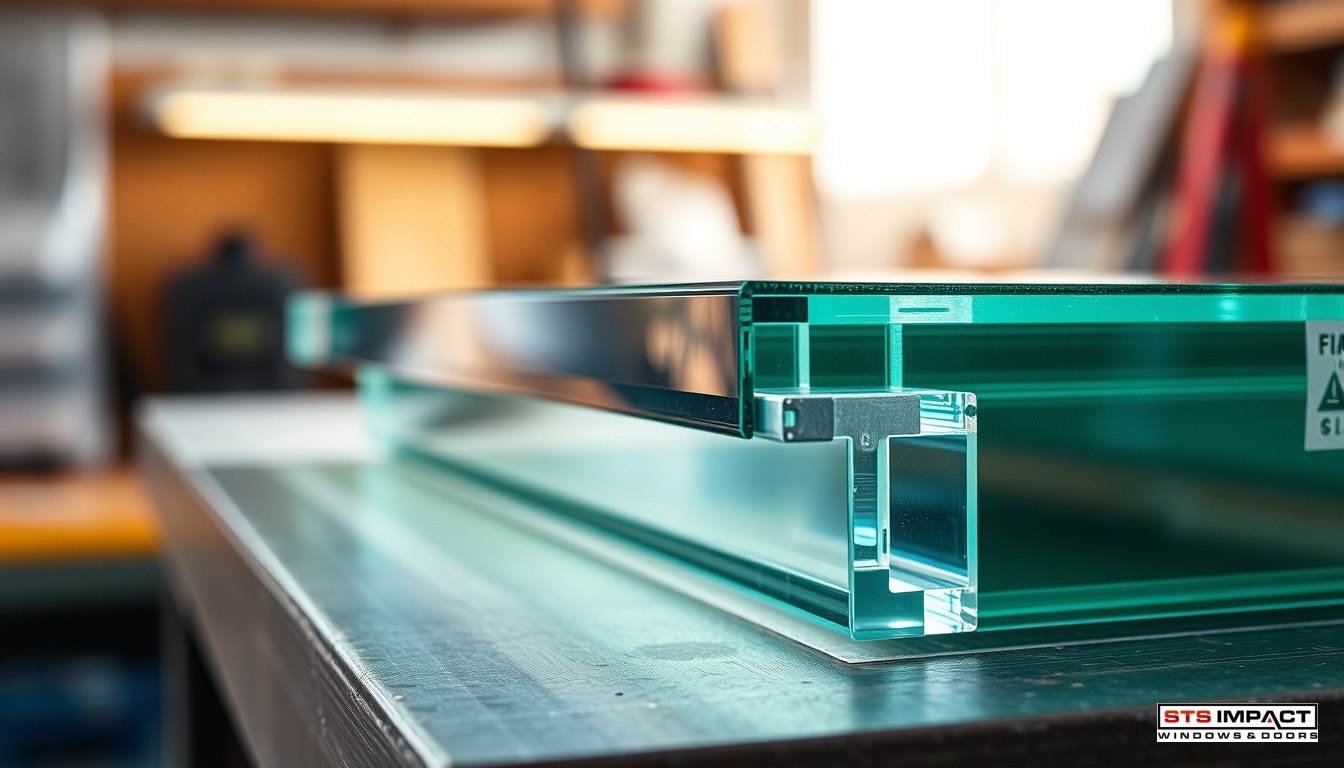
Why Does Impact Window Glass Come in Different Thickness Options?
The thickness of impact window glass is determined by the size of the window opening, the wind-load requirements for your specific location, and the building code that applies to your home. Larger openings need thicker glass to resist the pressure differentials a major storm creates. A contractor pulls the local code specs and the manufacturer’s engineering data together to figure out exactly which glass assembly is required before a single measurement is taken.
What Actually Goes Into the Glass Assembly


Most people think impact glass is just one thick sheet. It isn’t. A standard laminated impact glass unit is two lites of glass — usually annealed or tempered — bonded to a tough interlayer, typically made of PVB (polyvinyl butyral) or SGP (SentryGlas Plus). That interlayer is the part that keeps shattered glass locked in place instead of flying across a room.
How Thickness Ranges Are Set
The Florida Building Code sets minimum performance standards, but the actual glass thickness in a finished unit depends on the span of the window. A small bathroom window might use a 5/16-inch laminated unit. A large picture window in a coastal home could require 7/16-inch or thicker, sometimes with an added insulated glass unit (IGU) cavity for energy performance. Builders refer to these specs in pressure charts supplied by the manufacturer.
SGP vs. PVB Interlayers
The interlayer material changes how the glass behaves after impact. PVB interlayers are the industry standard and perform well across the full range of residential applications. SGP is stiffer and about five times stronger than PVB by tear resistance — it’s typically used in very large openings or in doors where the glass spans are wider. For most Boca Raton homes, a PVB laminate meets code and performs reliably, but a good contractor will walk you through which option makes sense for your specific openings. You can browse the glass configurations available through brands like PGT Impact Windows & Doors and CGI Impact Windows & Doors to get a sense of how manufacturers spec these assemblies.
Why Location Inside the Home Matters Too
A window facing the water on the east side of a house is exposed to different conditions than one on an interior courtyard. Contractors use wind-load zone maps to assign pressure ratings by exposure category. Homes right on the coast or with no nearby obstruction from trees and neighboring buildings sit in a higher exposure category, which pushes the required design pressure up. That design pressure number drives the glass thickness and frame specification.
Impact Doors Follow the Same Logic
The same glass-thickness principles apply to impact-rated entry doors and sliding glass doors. A large sliding door can have a glass panel spanning several feet, which means the engineering requirements are stricter than a typical window. If you’re replacing windows and doors at the same time, the glass specs for each product might differ even if they’re from the same manufacturer. Check out the impact doors overview for a closer look at how door glass configurations are handled.
Insulated Glass Units and South Florida Heat
A growing number of homeowners in the area are choosing insulated impact glass, which adds a sealed air or argon-gas cavity between the laminated lite and an outer lite. This cuts down on heat transfer, which matters a lot in South Florida where the sun hammers west-facing windows for hours every afternoon. The tradeoff is added cost and slightly more weight, but the energy savings over time can offset the difference. The STS FAQ page covers energy performance questions in more detail if you want to dig deeper into that topic.
Related Questions
Does thicker impact glass block more sound?
Yes, in general. Thicker laminated glass with a quality interlayer does a better job of dampening outside noise because the mass and the interlayer both absorb sound waves. Homes near busy roads or flight paths in Delray Beach and the surrounding communities often see a noticeable drop in interior noise levels after upgrading from single-pane glass, even when sound reduction isn’t the primary reason for the project.
Can I request a specific glass thickness, or does the contractor decide?
You can request a thicker or higher-performance glass assembly, and a reputable contractor will accommodate it as long as the product is approved for your opening size and meets Florida Building Code requirements. What you can’t do is go thinner than the engineered minimum for your window size and location. If you want a free quote that includes different glass options side by side, a contractor can lay out the specs and costs so you can make an informed call.


