

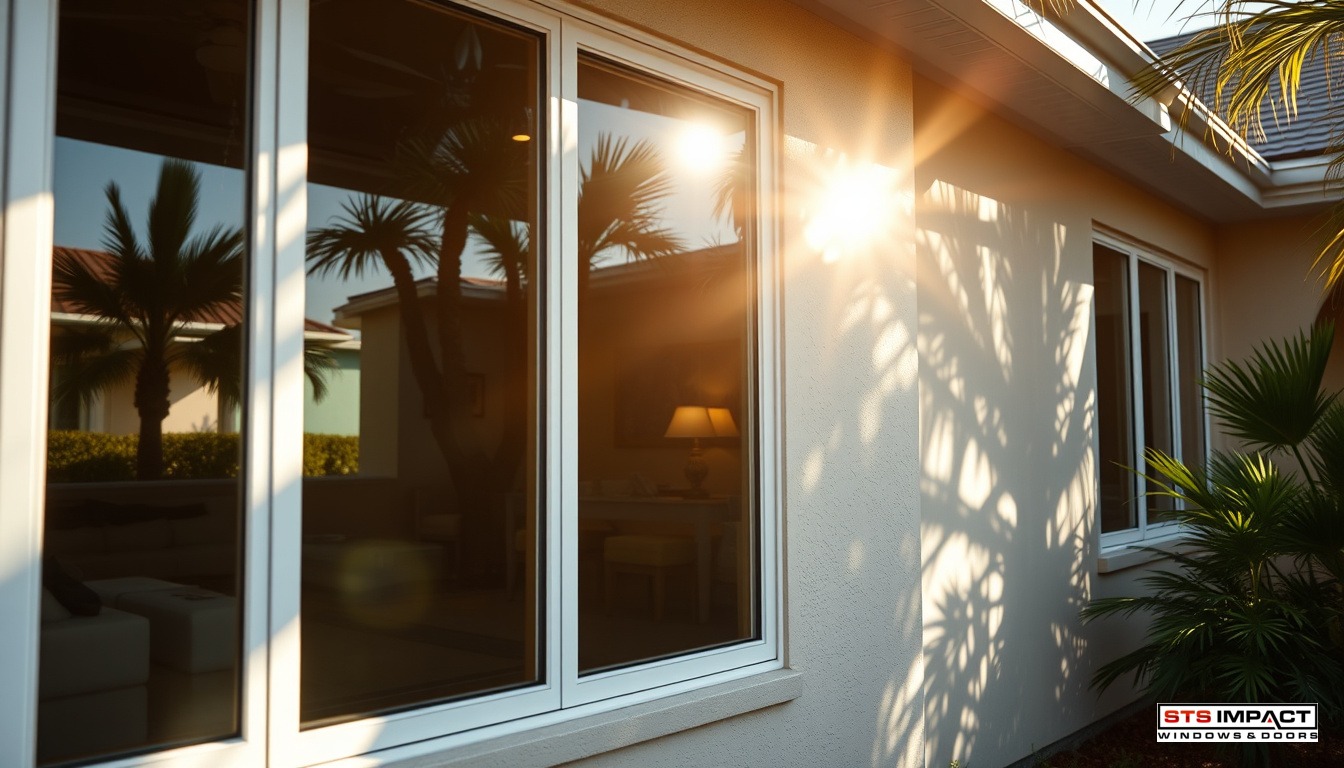
What Happens to Your Home’s Energy Bills After Installing Impact Windows?
Most homeowners in Boca Raton see a noticeable drop in energy costs after replacing standard windows with impact-rated windows. The laminated glass and tight-sealing frames cut down on heat transfer, which means your air conditioning system doesn’t have to work nearly as hard to keep indoor temperatures stable.
Independent studies from the U.S. Department of Energy estimate that inefficient windows can account for up to 30% of a home’s cooling and heating load. Swapping them out for properly installed impact glass can chip away at that number significantly in Florida’s climate.
Why the Energy Savings Are Bigger in South Florida Than Anywhere Else


Florida’s heat and humidity are relentless. Unlike northern states where heating season drives energy costs, here the cooling load runs almost year-round. That makes the thermal performance of your windows a much bigger deal.
Low-E Coatings Make a Real Difference
Most quality impact windows available today include a Low-E (low-emissivity) glass coating. This thin metallic layer reflects infrared heat before it passes through the glass. On a typical South Florida afternoon, that coating acts like a filter — it lets visible light in while bouncing radiant heat back outside. The result is a measurably cooler interior without blocking your view.
When you’re shopping for products, ask the contractor to show you the window’s Solar Heat Gain Coefficient (SHGC). For Florida homes, a lower SHGC — typically below 0.25 — is what you want. You can browse the manufacturers STS carries on the Our Products page to get a sense of what specs are available.
Air Infiltration Is the Hidden Cost Driver
Older aluminum-frame windows, especially those installed 20 or 30 years ago, develop small gaps over time. Conditioned air leaks out. Hot, humid air pushes in. Your AC runs longer, your electric bill climbs, and nothing about the window looks obviously broken. That’s the sneaky part.
Impact window frames are engineered to far tighter tolerances than standard replacement windows. The seals hold up under pressure-cycling from storms and daily temperature swings. Less air infiltration means a more consistent indoor climate and a compressor that cycles off sooner.
The Insurance and Long-Term Value Side of the Equation
The energy savings aren’t the only financial upside. Florida homeowners insurance carriers frequently offer premium discounts when a home carries certified impact-rated openings. The exact percentage varies by insurer, but some policyholders in this area report reductions of 15–25% on the wind portion of their premium. That’s a recurring annual saving on top of the monthly utility benefit.
Payback Period: What to Realistically Expect
The honest answer depends on three things: your current window condition, the size of your home, and what you’re paying for electricity. A Delray Beach townhouse with eight windows will have a very different payback timeline than a sprawling ranch in West Boca with 24 openings.
A rough benchmark most contractors use: between energy savings and insurance reductions, many homeowners recover the installation cost within 7 to 12 years. Windows typically last 25–30 years with proper care, so the math tends to work out. For a more specific estimate based on your home, it’s worth getting a free quote so you can run the numbers against your actual electric bills.
It also helps to check whether any rebates or financing options apply. You can find information on available programs at the City of Boca Raton’s official website and through STS’s own available discounts page.
Related Questions
Do impact windows help with noise reduction as well as energy efficiency?
Yes. The same laminated interlayer that holds the glass together during an impact also dampens sound waves. Homes near busy roads or flight paths often notice a significant drop in outside noise after installation, which is a side benefit that doesn’t show up on your electric bill but is just as real.
Can I install impact windows in phases to spread out the cost?
Technically yes, though there are trade-offs. Replacing the most exposed or largest openings first — typically the front elevation and any glass facing the prevailing wind direction — gives you the most immediate storm protection and energy benefit per dollar spent. A licensed contractor can help you prioritize which openings to tackle first. Visit the STS FAQ page for more answers on project planning and what to expect during the process.


