

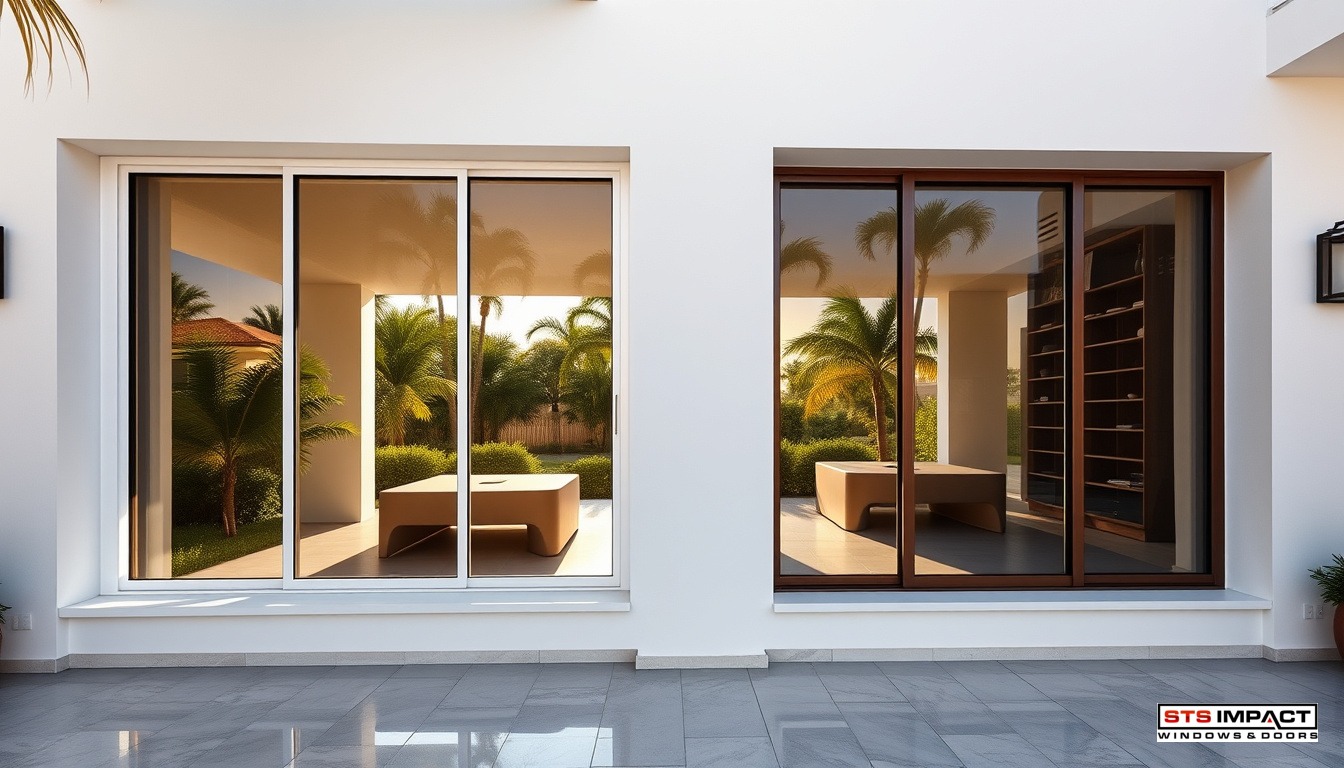
How Does Frame Color Affect the Performance of Impact Windows in South Florida’s Heat?
Frame color has a real effect on heat absorption and thermal performance. Darker frames absorb more solar radiation, which can increase surface temperatures significantly — sometimes 30 to 50°F higher than lighter alternatives — and that extra heat transfers into your home. In South Florida’s climate, where the sun is intense for most of the year, this detail is worth thinking about before you commit to a color.
What the Heat Actually Does to Your Window Frames
South Florida sits in a high solar radiation zone, meaning frames get punished by direct UV exposure daily. Aluminum frames, which are the most common choice for impact-rated windows in this region, conduct heat efficiently. That’s great for structural rigidity but not so great when a dark bronze or black frame is sitting in direct afternoon sun.
Aluminum vs. Vinyl in Hot Climates
Aluminum frames with a thermal break — a layer of insulating material separating the interior and exterior sections of the frame — do a much better job of slowing heat transfer regardless of color. Vinyl frames naturally insulate better, but they’re less common in storm-rated applications because they can warp under Florida’s extreme conditions. Most Boca Raton homes end up with aluminum frames for that reason, and the finish color becomes more important as a result.
White and tan finishes reflect more light and stay cooler under direct sun. Dark colors like bronze and black look sharp, especially on modern homes, but they absorb more heat. If your home has significant west-facing or south-facing exposures, lighter frame finishes can contribute meaningfully to keeping interior temperatures down.
Low-E Glass Does More Work Than Frame Color Alone
Here’s where many homeowners get the trade-off wrong: low-emissivity (Low-E) glass has a far bigger impact on solar heat gain than frame color does. The thin metallic coating on Low-E glass reflects infrared radiation before it enters the home, reducing solar heat gain by 30 to 50 percent compared to standard clear glass. Even a dark-framed window with quality Low-E glass will outperform a white-framed window with plain glass when it comes to keeping your air conditioning from working overtime.
If you’re choosing between a dark frame you love aesthetically and a lighter frame purely for thermal reasons, the better move is to prioritize glass coating and SHGC ratings (Solar Heat Gain Coefficient) first, then pick the frame color you prefer. Manufacturers like PGT and CGI offer detailed performance data on their glass packages — something a qualified installer will walk you through before you order.
Practical Advice When Choosing Your Frame Finish
Before settling on a color, ask your contractor a few specific questions. What’s the SHGC rating on the glass package they’re proposing? Does the frame include a thermal break? What direction do your largest window openings face?
HOA Rules and Local Building Codes
Many communities in the area have HOA color restrictions that limit your choices anyway. Boca Raton has a significant number of communities with architectural review requirements, so confirming what’s allowed before you fall in love with a finish saves headaches later. Your contractor should be familiar with local requirements and can often pull permit records that reference approved color palettes.
Long-Term Finish Durability
Color also affects how the frame holds up over time. High-quality powder-coated finishes resist fading and chalking better than painted or anodized alternatives. Lighter finishes can yellow slightly over years of UV exposure, while darker finishes may fade unevenly. Ask about the warranty on the frame finish specifically — it’s separate from the glass warranty and often shorter. For a full breakdown of what to look for in quality impact products, the STS product overview is a good starting point.
The City of Boca Raton’s official website also lists building and permitting resources that outline local code requirements for window replacements. For industry-wide performance standards, the National Fenestration Rating Council publishes ratings data on glass and frame systems that make comparing products much easier.
Related Questions
Does frame color affect the wind-resistance rating of an impact window?
No. Wind resistance ratings come from the glass thickness, interlayer construction, frame engineering, and installation method — not the color or finish applied to the frame. A properly installed dark bronze frame carries exactly the same Miami-Dade or Florida Product Approval rating as the same model in white. If you want to dig into how impact glass is tested and rated, the STS FAQ page covers the basics clearly.
Can I repaint or recoat my impact window frames after installation?
Technically yes, but it’s rarely a good idea without guidance from the manufacturer. Applying paint over a factory powder-coat finish can void the frame warranty and, if done poorly, can trap moisture behind the coating and accelerate corrosion — a real concern in South Florida’s salt-air environment. If your frames are fading or you want a color change, contact the original manufacturer to ask about approved refinishing options before doing anything to the surface.


