

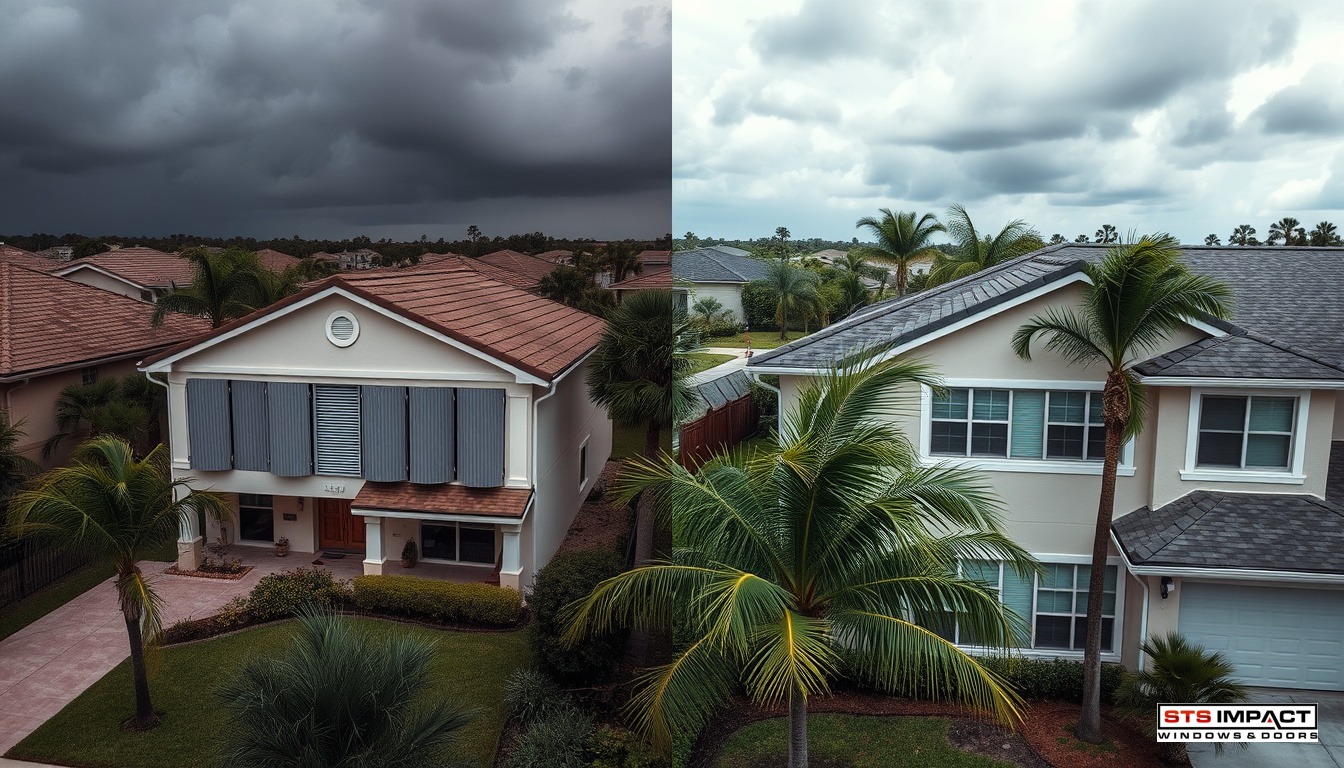
The Short Answer
Impact windows and doors are the most effective long-term solution for hurricane protection in South Florida because they are permanently installed, require no setup before a storm, and meet the Florida Building Code’s strict wind-load requirements. Unlike plywood or bolt-on shutters, they protect your home 24 hours a day without any action on your part.
That said, the right choice depends on your budget, your home’s age, and how much disruption you can tolerate during installation.
What Your Real Options Are (and What Each One Actually Does)

There is no shortage of products marketed as hurricane protection, but they are not all equal. Here is a plain breakdown of what is actually available to homeowners in this area.
Impact Windows and Doors
Impact-resistant windows and doors use laminated glass bonded to a structural frame. When struck by debris, the glass may crack but the inner membrane holds, keeping wind and rain out. They are permanently installed, so you never scramble to put anything up before a storm. They also reduce noise, cut UV exposure, and typically lower homeowner’s insurance premiums. The trade-off is upfront cost, which runs higher than most shutter systems, and a professional installation timeline of a few days to a couple of weeks depending on the scope of work. You can browse the specific products available through STS Impact Windows & Doors’ product lineup to get a sense of what fits your home.
Accordion and Roll-Down Shutters
Accordion shutters fold out from the sides of a window and latch in the center. Roll-down shutters retract into a housing above the opening. Both are faster to deploy than panels and offer solid protection, but they do require someone to be home and physically close them before a storm arrives. If you travel frequently or have mobility limitations, that is a real problem. They also add a visible hardware presence to your home’s exterior year-round.
Panel Shutters (Steel, Aluminum, or Polycarbonate)
Panel systems are the least expensive option upfront. Corrugated metal or clear polycarbonate panels bolt over openings when a storm is coming. Clear polycarbonate panels let light in, which is a genuine comfort improvement over solid metal. The downside is storage. A typical home needs dozens of panels, and they need somewhere dry to live between storms. Installation takes several hours of physical labor, and in Boca Raton’s fast-moving storm season, that window of preparation time can be short.
Film and Screens
Hurricane-rated window film and fabric screens exist at the lower end of the market. Film holds broken glass in place but does not stop penetration from significant debris. Screens rated for wind-borne debris perform better, but neither meets the same code standard as impact glass or a tested shutter system. They work best as a supplemental layer, not a primary defense.
What Actually Matters When You Choose
Florida’s Wind-Borne Debris Region Rules
Boca Raton sits inside Florida’s Wind-Borne Debris Region, which means any opening protection must be tested and approved to resist a specific wind speed and debris impact. The Florida Building Commission publishes the testing standards that all approved products must meet. If a product does not carry a Notice of Acceptance (NOA) from Miami-Dade County or a Florida Product Approval number, it does not legally satisfy the requirement. This matters for both permitting and insurance.
Insurance Discounts Are Real, But Vary
Florida’s My Safe Florida Home program and most private insurers offer premium reductions when all openings, including garage doors, are protected to code. The discount percentage depends on your insurer and your home’s age, but some homeowners see reductions of 25% to 45% on the wind portion of their premium. Florida’s wind mitigation inspection program explains exactly what a licensed inspector looks for when calculating your credit.
Impact windows and doors tend to earn the largest credits because they protect openings permanently. Shutters qualify too, but only if they cover every single opening, including the garage. Missing even one window can eliminate the discount entirely.
Total Cost of Ownership
A lot of homeowners compare sticker prices and stop there. But panel shutters require storage space, physical labor every storm season, and eventual replacement of hardware. Impact windows require almost nothing after installation beyond normal cleaning. When you stretch that math over 10 or 15 years, the gap between options narrows considerably. For a detailed look at what a project might cost for your specific home, request a free quote and get real numbers rather than estimates.
Related Questions

How early before a hurricane should I install impact windows?
You cannot install impact windows in the days before a storm. The permitting and installation process takes weeks, sometimes longer during peak demand seasons. If a named storm is already forming in the Atlantic, most installers in the area will have full schedules and open permits cannot be rushed through the county. The time to upgrade is during calm weather, ideally spring before the June 1 season start.
Do I still need to do anything to prepare my home if I have impact windows?
Impact glass handles wind-borne debris and pressure changes on its own, so you do not need to cover windows before a storm. What still matters is checking that your garage door is rated for high winds, that exterior items like patio furniture are brought inside, and that your entry doors are properly latched. The glass does its job, but the rest of the home still needs basic storm prep.


