

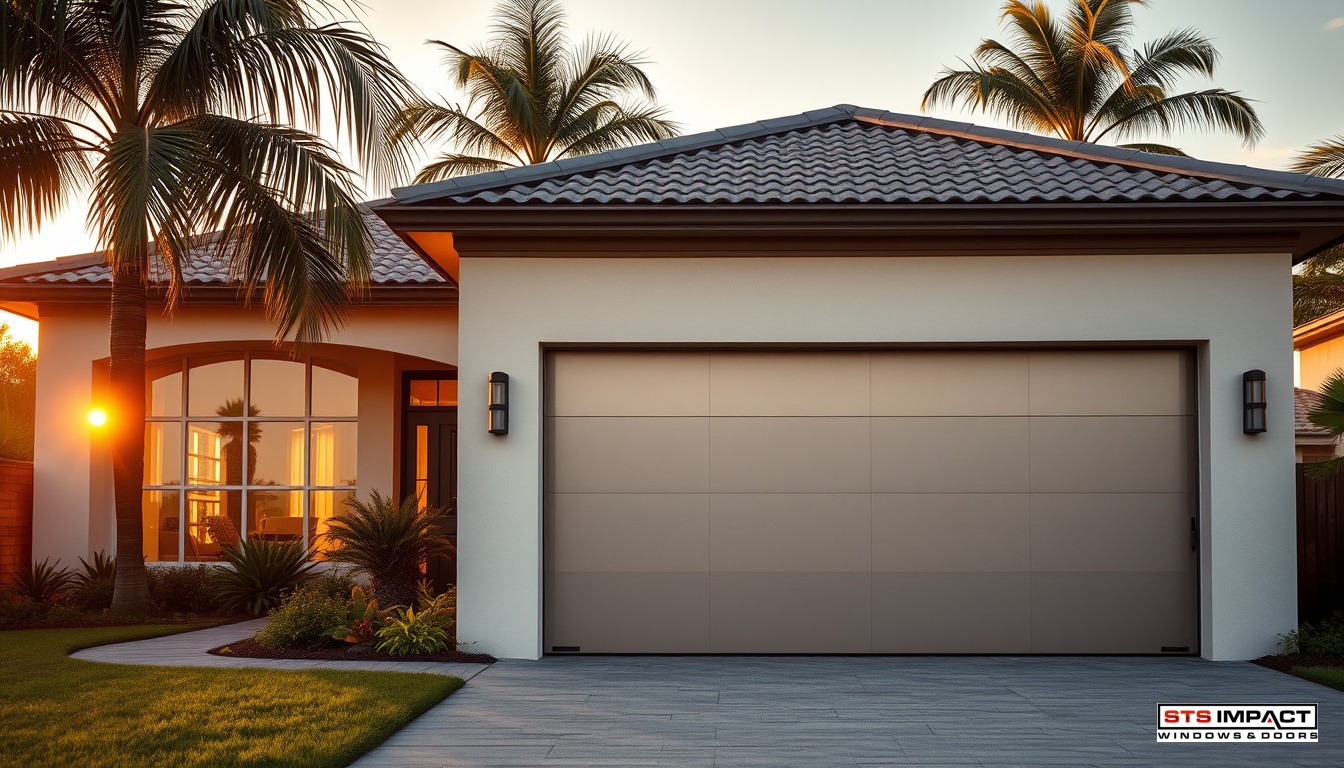
Why Impact Garage Doors Matter More Than Most Homeowners Realize
The garage door is the largest opening on most homes, yet it’s often the last thing people think about when preparing for hurricane season. In a coastal county like Palm Beach, that’s a problem. A standard garage door can fail under high wind pressure, and when it does, the resulting pressure surge can blow out walls and lift rooflines. Replacing it with a hurricane-rated impact garage door isn’t just a smart upgrade — it’s one of the most structurally important changes you can make to a South Florida home.
Homes near Military Trail, along Yamato Road, and in neighborhoods like San Daliso and Boca Del Mar sit in some of the more wind-exposed corridors of eastern Palm Beach County. Properties close to the Boca Raton coastline face salt air year-round, which accelerates wear on traditional steel and aluminum door systems. Impact-rated garage doors are built with that environment in mind: reinforced panels, heavy-duty hardware, and glazing that meets Miami-Dade County NOA approval standards.
It’s also worth knowing that standard plywood bracing — a common DIY workaround — does not satisfy Florida’s current building code requirements. A properly permitted impact garage doors installation is the only code-compliant solution for new construction and most replacement projects in this part of the state.
How These Doors Differ from Standard Garage Doors
A regular garage door is designed primarily for convenience and curb appeal. An impact-rated version is engineered to a completely different performance threshold. The panels are thicker, typically 24-gauge steel or reinforced composite, and the door system as a whole is tested against large and small missile impact as well as sustained wind loads. Many models carry wind ratings exceeding 150 mph, which is the baseline requirement for properties in high-velocity hurricane zones.
Hardware matters just as much as the door itself. Heavy-duty hinges, reinforced bottom brackets, and upgraded torsion springs all contribute to the system’s ability to stay in place during a storm. When you look at the impact windows and doors manufacturers that produce these systems, you’ll notice the engineering specs go well beyond what a big-box store product can offer.
Seasonal Maintenance That Keeps Your Investment Performing


Installing an impact garage door is not a one-time event you forget about. South Florida’s climate is hard on any exterior product. Salt-laden air off the Atlantic corrodes metal hardware, UV exposure degrades weather seals, and the frequent thermal cycling between hot days and air-conditioned interiors causes expansion and contraction in panel joints over time. A simple annual maintenance routine can add years to the life of your door system and keep it functioning correctly when a storm actually arrives.
Here’s what a practical seasonal checklist looks like for coastal Palm Beach County homes:
- Rinse the door panels and hardware with fresh water every 60 to 90 days to remove salt buildup, especially after periods of onshore wind.
- Inspect the bottom seal and perimeter weather stripping before and after hurricane season (June and December are good checkpoints). Replace any sections that show cracking or compression set.
- Lubricate all moving parts — springs, rollers, hinges, and the opener rail — with a silicone-based lubricant. Avoid WD-40, which attracts dirt and breaks down quickly in heat.
- Check that all anchor bolts securing the door track to the wall framing remain tight. Vibration from wind events can work fasteners loose over time.
- Test the auto-reverse safety feature and make sure the manual disconnect cord is accessible and functioning.
If you notice unusual noise during operation, gaps between the door and the frame when closed, or visible corrosion on the torsion spring, those are signs to call a qualified technician rather than waiting for the next inspection cycle. The home tips for Florida impact window and door owners on the STS site cover several of these scenarios in more detail.
What Salt Air Does to Untreated Hardware Over Time
Galvanic corrosion is a real issue within two to three miles of the Florida coastline. When dissimilar metals contact each other in the presence of salt moisture, the less noble metal degrades faster. Garage door systems have multiple metal-to-metal contact points, so choosing marine-grade or galvanized hardware from the start, and maintaining it diligently, is the difference between a 20-year door and a 10-year door. This is especially relevant for homes east of US-1, between Spanish River Boulevard and Palmetto Park Road, where salt exposure is highest.
Powder-coated steel panels hold up better than painted finishes in this environment. Some manufacturers now offer aluminum-skinned panels specifically rated for high-salt coastal zones. Ask your installer which product line is appropriate for your specific distance from the water. The answer can change significantly between a home on A1A versus one near Town Center Mall — just a few miles west — where salt exposure drops considerably.
Choosing the Right Product for Your Boca Raton Home
Not every impact garage door on the market is appropriate for every home. Panel style, material, insulation rating, and wind load certification all need to match your specific property and its exposure category. Florida’s building code assigns every structure to a wind speed zone, and your installer should pull the permit with the correct design pressure values for your address before a single bracket goes into the wall.
Insulation is another factor worth considering seriously. In South Florida, a well-insulated garage door can meaningfully reduce the heat load on an attached garage, which in turn lowers the temperature in adjacent living spaces and reduces cooling costs. Look for doors rated at R-12 or higher if your garage shares a wall with a bedroom, kitchen, or living room. Polyurethane foam core panels offer better insulation per inch than polystyrene and also add structural rigidity to the door itself.
For homeowners who want to compare specific brands before committing, the full product lineup available through STS includes options from several manufacturers with different performance profiles, so there’s a sensible way to match product to budget and exposure rating without guessing.
It’s also worth checking whether you qualify for a discount or financing program before signing a contract. Palm Beach County homeowners may be eligible for the My Safe Florida Home grant program, which provides matching funds for qualifying wind mitigation upgrades including garage door replacements. The application process has specific documentation requirements, and getting your inspection done before the grant window closes matters. You can review available discounts for STS customers to see what programs are currently active alongside state and federal incentives.
Florida’s Department of Financial Services maintains updated information on the My Safe Florida Home program, including eligibility requirements and inspection scheduling, which is a good first stop before calling any contractor.
Frequently Asked Questions
Do impact garage doors require a permit in Boca Raton?
Yes. Replacing a garage door in Boca Raton requires a building permit through Palm Beach County or the city’s building department, depending on the property’s jurisdiction. The installer must submit product approval documentation showing the door meets the required design pressure for your wind zone. A final inspection is required to close the permit, and that paperwork is what you’ll need when notifying your homeowner’s insurance carrier of the upgrade. Skipping the permit creates problems at the time of sale and can void your coverage in the event of a claim.
How long does a typical impact garage door installation take?
Most single-car or two-car garage door replacements take four to six hours for the physical installation, assuming the rough opening dimensions are standard and no structural modifications are needed. The permit process adds time on the front end — typically one to three weeks depending on current review volumes at the building department. Your installer should handle the permit application and schedule the final inspection, so you’re not managing that paperwork yourself.
Can I use my existing opener with a new impact garage door?
It depends. Impact-rated garage doors are heavier than standard doors, sometimes significantly so. An opener that was adequate for a lightweight residential door may not have the torque to reliably operate a reinforced impact door, especially over years of daily use. Your installer should check the opener’s horsepower rating against the new door’s weight specifications. In many cases, upgrading to a belt-drive opener rated at 3/4 or 1 horsepower is the right call at the same time as the door replacement. This is also a good moment to add battery backup capability, since power outages during storms are common in this area.
Getting the Process Started
If you’re a homeowner near Yamato Road, in the Broken Sound or Woodfield communities, or anywhere between Glades Road and the water, the time to think about your garage door is before storm season — not during it. STS Impact Windows & Doors serves the Boca Raton area and the broader Palm Beach County market with installations that are fully permitted, backed by manufacturer warranties, and completed by crews who know the specific code requirements for this region. Reach out through the free quote request form to get a site visit scheduled, or visit the STS FAQ page if you have questions about the process before committing to an appointment. The City of Boca Raton’s official website also has building department contact information if you want to verify permit requirements directly with the city before your consultation.


