

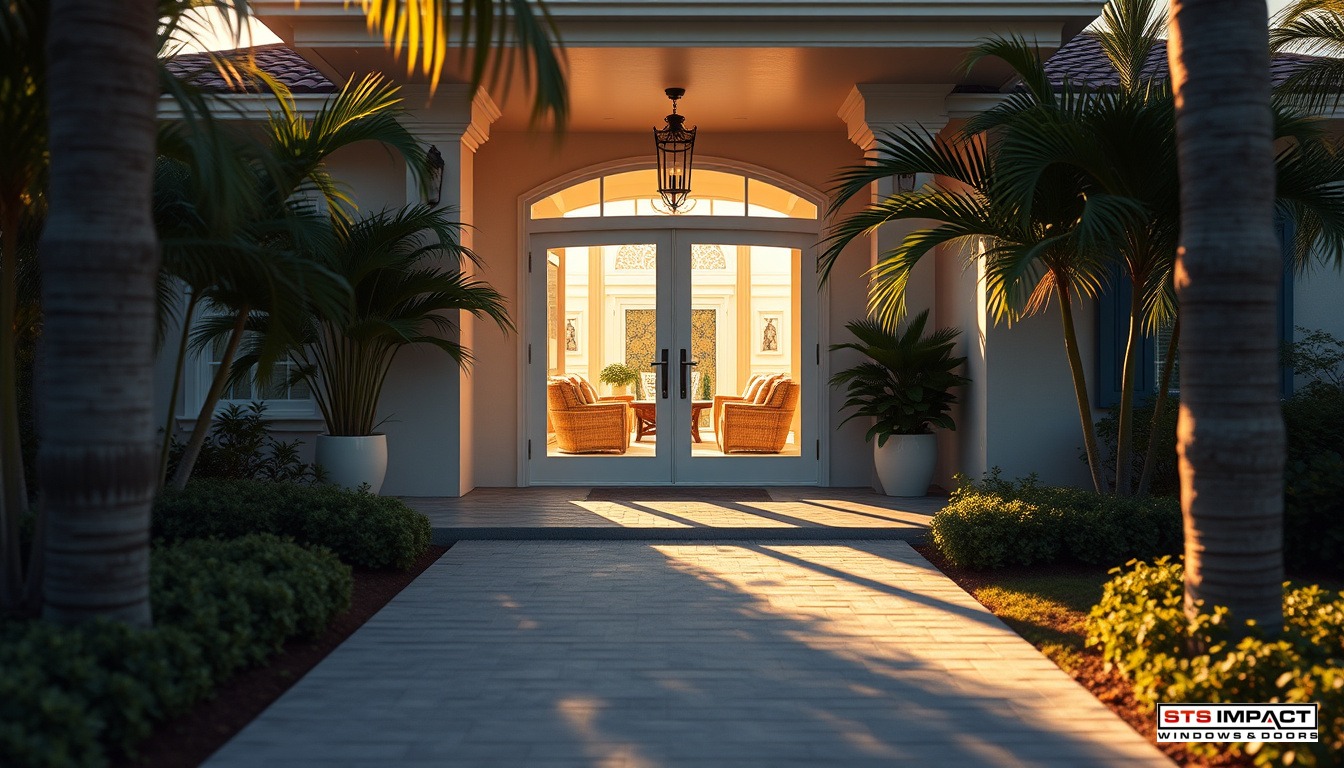
Why Custom Impact Doors Matter More in This Corner of South Florida
The stretch of coastline running from South Ocean Boulevard in Delray Beach down through the A1A corridor into Boca Raton is some of the most wind-exposed residential property in Palm Beach County. Homes here aren’t just close to the water — they’re directly in the path of Atlantic storm systems that build intensity over open ocean before making landfall. Standard doors, even reinforced ones, weren’t designed for that kind of sustained punishment.
Custom impact doors solve a specific problem that off-the-shelf options can’t. Every opening in a home is slightly different. Older construction along this part of South Florida often has non-standard rough openings, thicker walls, or architectural details that make a stock door a poor fit — literally. When a door doesn’t seal properly because it wasn’t built for the actual opening, the wind-resistance rating on the box means very little during a real storm.
The area around the Waves Surf Academy on South Ocean Boulevard gives a good picture of the exposure level homeowners deal with. Properties within half a mile of that stretch face consistent salt air, humidity, and seasonal wind events. A door that fits perfectly and seals correctly on day one can warp, corrode, or pull loose from the frame within a few years if the materials aren’t rated for that environment. That’s the case for a custom-built unit as much as a standard one — the difference is that a custom impact door in Florida is specified for the actual site conditions, not a regional average.
What “Custom” Actually Means in a Door Specification
The word gets used loosely in the industry, so it’s worth being specific. A true custom door starts with the measured opening — not a standard 36-inch or 6/8 height assumption. The frame material, glass thickness, interlayer type, hardware spec, and finish are all selected for the project rather than pulled from a catalog. For impact french doors Florida configurations, that means accounting for the paired slab weight, the center post or astragal, and the threshold height relative to finished floor level.
Manufacturers like PGT Impact Windows & Doors and CGI Impact Windows & Doors both offer custom sizing, but the specification process requires someone who knows what to ask for. That’s where the contractor matters as much as the product itself.
Selling a Home Near Camino Real or Palmetto Park Road? Permits Are Not Optional


This is the part most homeowners don’t think about until they’re three days from closing. Palm Beach County requires a permit for any exterior door replacement, full stop. If a previous owner installed a door — even a high-quality hurricane impact door — without pulling the proper permit, that installation is legally unpermitted. It doesn’t matter how well the door performs. At the point of sale, title companies and lenders will flag it.
The remediation process isn’t simple. An unpermitted installation typically requires a licensed contractor to inspect the work, file for an after-the-fact permit, schedule a county inspection, and potentially correct any non-compliant aspects of the original job. In some cases, the door has to come out entirely. This creates closing delays that can run two to four weeks and, depending on the buyer’s financing, can kill a deal outright.
Neighborhoods along Camino Real and the streets feeding off Palmetto Park Road toward the Intracoastal see this issue regularly. The mix of older construction and high turnover in the real estate market means a lot of improvements were made over the years without consistent permitting. Buyers and sellers alike should verify permit status before a property goes on the market — not after. You can search Palm Beach County’s Planning, Zoning & Building department records online to check permit history for any address.
What Proper Permitting Looks Like for a Door Replacement
A compliant replacement starts with a contractor pulling the permit before any work begins. The permit application includes the product approval number for the specific door unit being installed — this is the Florida Building Code product approval, not just a manufacturer spec sheet. The installer schedules a rough opening inspection, installs the door, and then calls for a final inspection. The county inspector signs off, and that record stays attached to the property permanently.
That signed-off permit is a real asset at resale. Buyers’ agents in this market increasingly request proof of permitted improvements as part of due diligence. A permitted impact door installation with documented product approval gives a buyer’s lender exactly what they need and removes a common friction point from the closing process. See common questions about the installation and permitting process for more detail on what to expect at each stage.
Insurance Reductions and the Documentation Homeowners Miss
Replacing an exterior door with a Florida Building Code-compliant impact door can reduce windstorm insurance premiums, but the reduction doesn’t happen automatically. The insurer needs documentation, and most homeowners submit too little of it. A product approval number alone usually isn’t enough. Carriers want the opening protection form — typically a Citizens or OIR-B1-1802 form — completed by a licensed inspector or contractor, along with the permit and inspection record.
For homes in FEMA flood zone AE or X — and much of the area between Federal Highway and A1A near Delray Beach falls into one of those designations — there’s a separate conversation to have with a flood insurance carrier. Impact doors Florida installations don’t automatically lower flood premiums the way they affect windstorm coverage, but proper documentation of the opening’s design pressure rating and the installation’s compliance with current building codes can support an elevation certificate review that does affect flood premium calculations. The National Flood Insurance Program guidance outlines what documentation is relevant for property-level flood risk assessments.
The bottom line: get the paperwork right at installation time. Filing for insurance credits six months after the job is done, when the contractor has moved on to other projects, is harder than it sounds. A good installer hands over a complete package — permit, inspection sign-off, product approval, and the completed opening protection form — before they leave the job site.
Which Door Configurations Qualify for the Biggest Premium Reductions
Not every door opening carries the same insurance weight. Large openings — impact french doors configurations, wide sliders, or any opening exceeding roughly 10 feet in total width — are considered high-risk by most carriers because they represent a larger potential breach. Replacing those specific openings with properly rated units and documenting them correctly tends to produce the most meaningful premium movement. Single-panel entry door replacements matter too, but the proportional impact is usually smaller. If you want to see the full range of door products available for this kind of project, the impact doors available across Florida covers the current lineup in detail.
Frequently Asked Questions
How long does a custom impact door installation take from order to final inspection?
Lead times vary by manufacturer and configuration, but most custom impact door orders in Palm Beach County run six to twelve weeks from signed contract to delivery. Installation itself is typically one to two days depending on the number of openings and whether any frame modifications are needed. The county inspection is scheduled after installation and usually occurs within one to two weeks of the request. Plan for roughly three to four months from contract signing to a fully closed-out permit in the current South Florida market.
Can a custom impact door be installed in a non-standard or oversized opening?
Yes, and this is one of the primary reasons homeowners choose custom over stock. Openings that are wider, taller, or irregular in shape require a door unit built to those exact dimensions with the correct design pressure rating for the opening size. Larger openings require higher DP ratings because they face greater wind load. The manufacturer’s engineering team calculates the appropriate glass thickness, interlayer specification, and frame reinforcement based on the actual opening dimensions and the local design pressure requirements under the Florida Building Code.
Do impact doors near the ocean require any special material or finish specifications?
Coastal exposure — generally defined as within 3,000 feet of the mean high-water line — requires hardware and finish specifications that resist salt air corrosion. This typically means stainless steel or marine-grade hardware rather than standard hardware, and it affects the frame finish specification as well. Some manufacturers offer specific coastal packages for this reason. Homes close to the water near South Ocean Boulevard or the Intracoastal should confirm that the specified product carries a coastal approval, not just the standard Florida Building Code product approval.
If you’re weighing a door replacement on a coastal property or preparing a home for sale in this part of Palm Beach County, the specifics matter more than the general advice you’ll find online. STS Impact Windows & Doors works with homeowners across the Boca Raton and Delray Beach area, handling the measurement, specification, permitting, and inspection process from start to finish. You can browse available impact window and door products to get a sense of what’s possible, or request a free quote and have someone come out to look at your specific openings. The right door for your home starts with the right measurement — and STS Impact Windows & Doors gets that part right before anything else happens.


