

What’s the Difference Between Impact-Rated and “Hurricane-Resistant” Windows?
Impact-rated windows are tested and certified to meet strict wind-load and debris-impact standards set by Florida’s building code, meaning they’ve physically passed large-missile and cyclic pressure tests. “Hurricane-resistant” is a marketing term with no standardized definition, and windows labeled that way may offer little more protection than standard glass. If you’re replacing windows in South Florida, only Miami-Dade or Florida Product Approval numbers on the label confirm the window is genuinely code-compliant.
Why the Label Matters More Than You Think


A lot of homeowners assume any window marketed as storm-safe will hold up when a major hurricane rolls through. That’s a costly assumption. Florida’s building code, shaped heavily by the damage from Hurricane Andrew in 1992, requires that products installed in High-Velocity Hurricane Zones carry verifiable approval numbers. Without those numbers, your contractor can’t legally pull a permit, and your installer can’t pass inspection.
What the Testing Actually Involves
True impact-rated products go through two punishing test sequences. The first fires a 9-pound 2×4 at the glass at 50 feet per second to simulate windborne debris. The second cycles the window through thousands of positive and negative pressure pulses to mimic the repeated stress a hurricane puts on a structure over hours. A window that survives both tests earns its product approval number. One that skips those tests, regardless of how it’s described in a brochure, hasn’t earned anything.
You can verify any product by searching Florida’s Florida Building Commission product approval database before a single window is ordered for your home.
Where Homeowners Get Confused
Some window brands use tempered glass, laminated glass, or thicker frames and call the result “storm-safe.” Laminated glass is actually one component of a genuine impact window assembly, but the glass alone isn’t the whole story. The frame, the glazing compound, the anchoring system, and the way the unit is installed in the rough opening all have to work together. A laminated glass pane set into a frame that wasn’t engineered for high wind loads will fail at the perimeter, not through the glass itself. That’s why the full assembly, not just the glass, needs certification.
Curious about which manufacturers actually carry the right certifications? The American Architectural Manufacturers Association publishes testing standards and can help you understand what the ratings on a spec sheet mean.
How This Affects Your Installation in Boca Raton
Palm Beach County enforces Florida Building Code requirements closely, and the permit process for window replacement reflects that. A licensed contractor has to submit the product approval numbers along with a signed and sealed drawing before work begins. If you’re working with someone who suggests skipping the permit to save time or money, that’s a serious red flag. Unpermitted work can void your homeowner’s insurance, create problems when you sell the property, and leave you exposed if a storm causes damage.
At STS Impact Windows & Doors, every installation starts with a proper permit pull and uses products from manufacturers like PGT, CGI, and ES Windows, all of which carry verified Florida product approvals. You can browse the full lineup on the Our Products page or request a free quote to get specific recommendations for your home’s construction type.
What to Ask Before Signing a Contract
Before you commit to any window replacement project, ask the contractor for the Florida product approval number for each window and door being installed. Ask to see their state contractor’s license and confirm it covers window and door installation specifically. And ask whether they handle the permit submission themselves or leave that to you. A reputable installer handles all of it, not just the physical work.
Related Questions
Can a homeowner tell if their existing windows are impact-rated just by looking at them?
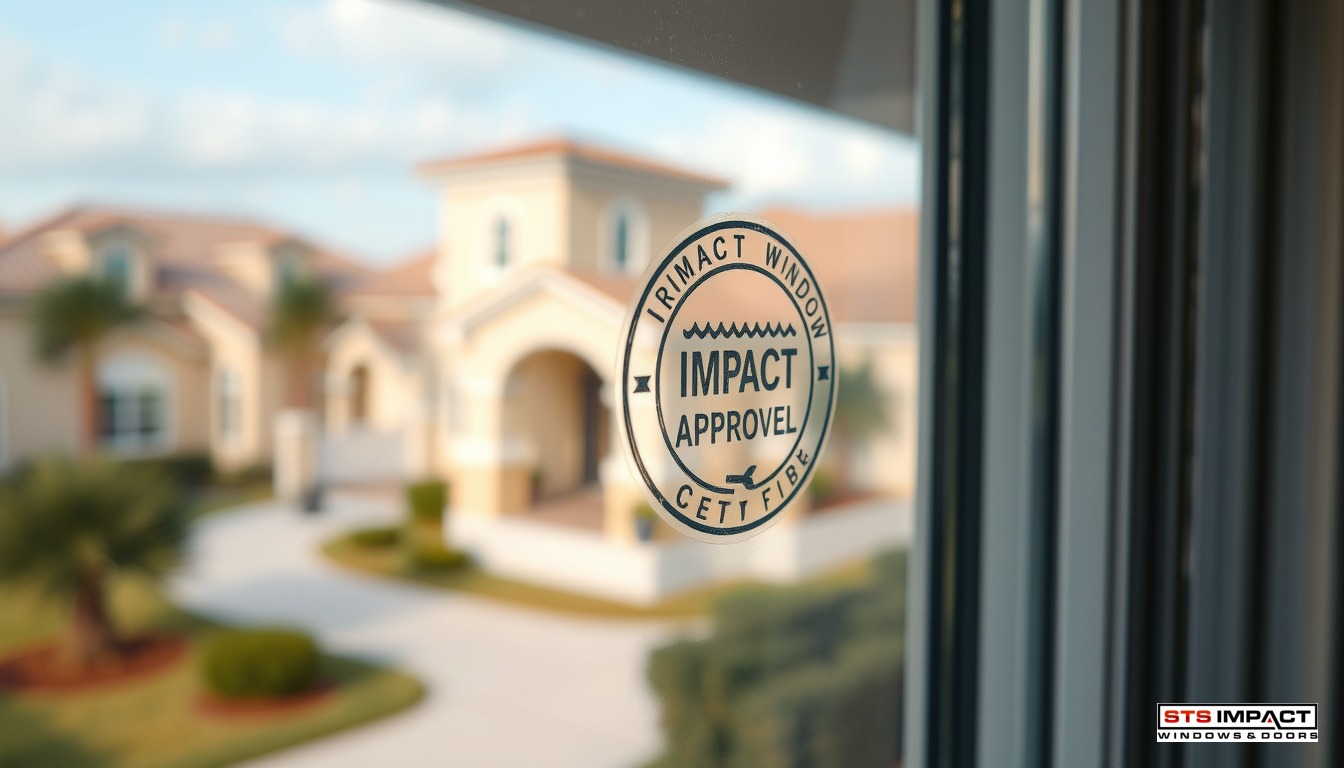
Sometimes, but not reliably. Genuine impact windows often have a small etched or printed label in the corner of the glass listing the manufacturer and product approval code. If that marking is missing, check the window frame for a sticker or rating plate. No markings at all usually means the windows predate modern impact standards or were never certified, which is common in homes built before the mid-1990s.
Does the type of frame material affect how well an impact window performs?
Yes. Aluminum frames are the most common in South Florida because they handle heat, humidity, and salt air well without warping. Vinyl frames cost less upfront but can soften under sustained high temperatures and may not perform as well in the most extreme wind scenarios. For coastal areas around Delray Beach and the surrounding communities, aluminum-framed units from a certified manufacturer are generally the preferred choice among experienced contractors.


