

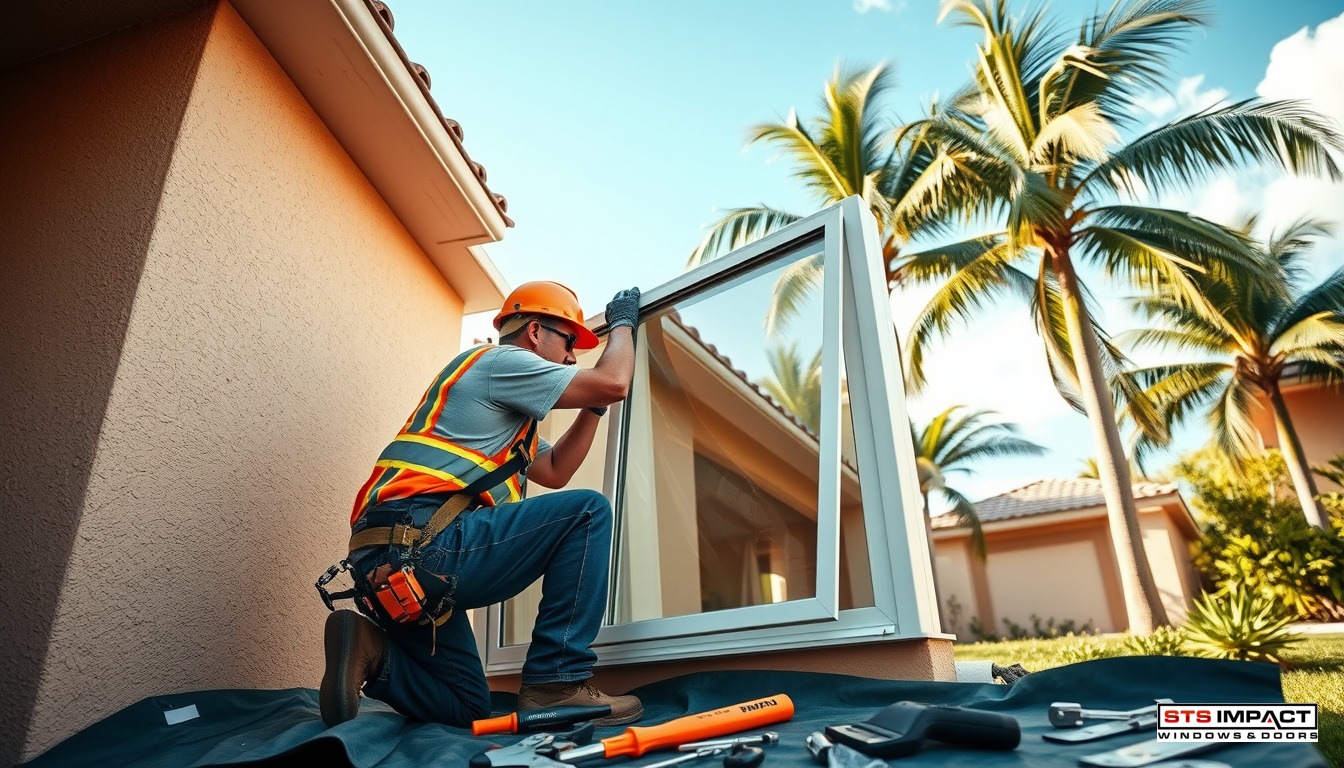
What Does a Contractor Actually Do During an Impact Window Installation?
A qualified contractor does far more than swap out glass. The process involves a detailed site assessment, proper permitting through the local building department, precision removal of existing windows, and a code-compliant installation that gets inspected before it’s signed off. Every step is tied to Florida’s strict building code requirements, which exist because poorly installed windows can fail in a storm even if the glass itself is rated for hurricane conditions.
The Installation Process, Step by Step


A lot of homeowners picture the job as pulling out the old window and dropping in a new one. The reality is more involved, and understanding what’s actually happening helps you recognize whether a contractor is doing it right.
Before the First Window Comes Out
The project starts with permit approval from Palm Beach County or the relevant municipality. In Boca Raton, that means submitting product approval numbers, engineering documents, and sometimes drawings of the opening. No legitimate installer skips this. Permits protect you when it’s time to sell the house, file an insurance claim, or survive a post-storm inspection.
A good contractor also inspects the rough openings and framing at each window location. Older homes in East Boca and areas near the Intracoastal sometimes have wood rot, corroded fasteners, or framing that isn’t deep enough for modern impact units. Finding that before demo saves a lot of headaches mid-project.
Removal and New Window Placement
Existing windows come out carefully to avoid damaging surrounding stucco, drywall, or trim. Then the opening is cleaned, leveled, and shimmed so the new unit sits plumb and square. Impact-rated windows are anchored with fasteners that penetrate into the structural frame at intervals specified by the product’s Notice of Acceptance (NOA). That spacing isn’t a suggestion — it’s what gives the window its wind rating.
After anchoring, the perimeter gets sealed with an approved weatherproofing material. Water infiltration around the frame is one of the leading causes of long-term damage in South Florida homes, so this step matters as much as the glass itself.
Inspection and Final Sign-Off
Once all units are in, a building inspector visits the property to verify the work matches the permit. They check anchor spacing, flashing, and that the installed products match the approved specs. Only after that inspection passes is the permit officially closed. If you’re working with a contractor who discourages permits or tells you inspection isn’t necessary, that’s a serious red flag. You can learn more about what separates a qualified installer from the rest on our Why Us page.
How Long Does the Full Job Take?
For a typical single-family home in the area, the physical installation usually runs one to three days depending on the number of openings. A smaller condo with six to eight windows might be done in a single day. A larger home with 20-plus openings plus impact doors could stretch to a full week.
What takes longer is the front end. Permitting timelines vary by jurisdiction and season, and lead times for custom-sized window orders from manufacturers like PGT or CGI can run four to twelve weeks depending on demand. Hurricane season tends to spike orders, so starting the process in late winter or early spring usually shortens your overall wait.
The City of Boca Raton’s official city website has building department contact info if you want to verify permit status or look up inspection schedules directly. For broader guidance on Florida’s building code standards for wind-borne debris protection, the Florida Building Commission publishes the current code and product approval database.
If you want a clearer picture of timelines and costs for your specific home, request a free quote and a project consultant can walk through the details with you.
Related Questions
Do impact windows require any maintenance after installation?
Minimal upkeep is needed, but it’s worth doing. Rinse the frames and weep holes a couple of times a year to clear salt and debris, and check the weatherstripping every few years. The hardware — locks, hinges, and tilt latches — should be lubricated annually with a silicone-based product. Most manufacturers provide a maintenance guide, and the STS FAQ covers common post-installation questions.
Can impact windows be installed on a home with non-standard or arched openings?
Yes, though it takes more planning. Custom-shaped openings like arches, octagons, or oversized fixed panels require factory-fabricated units built to the exact rough opening dimensions. The installation method is the same, but lead times are longer and costs are higher than standard sizes. An experienced contractor will template the opening precisely before ordering to avoid fit issues on delivery.


